
When Likes Become More Valuable Than Social Harmony
Social media was once hailed as a democratizing force that gave ordinary citizens a voice. In Bihar today, however, a troubling trend is emerging: the monetisation of social media content is increasingly rewarding outrage, caste polarization and communal division. As platforms pay creators for views, engagement and virality, a section of content creators has discovered that caste conflict, emotional provocation and sensational allegations generate far more traffic than balanced reporting.
The result is a dangerous ecosystem where tragedy is transformed into content, grief into engagement, and social tensions into revenue.
Recent studies and reports indicate that social media has become a major arena for caste-based mobilisation and narrative-building in Bihar, with viral reels, influencer content and caste-centric messaging increasingly shaping public discourse.
The Algorithm Rewards Anger Social media algorithms are designed to maximize engagement. Videos that provoke anger, fear or identity-based emotions often perform better than nuanced analysis. A creator posting a balanced explanation of a criminal incident may receive a few thousand views. Another creator framing the same incident as an attack on an entire caste can generate millions of views, thousands of shares and substantial monetisation income. This incentive structure is pushing some creators toward increasingly divisive content.

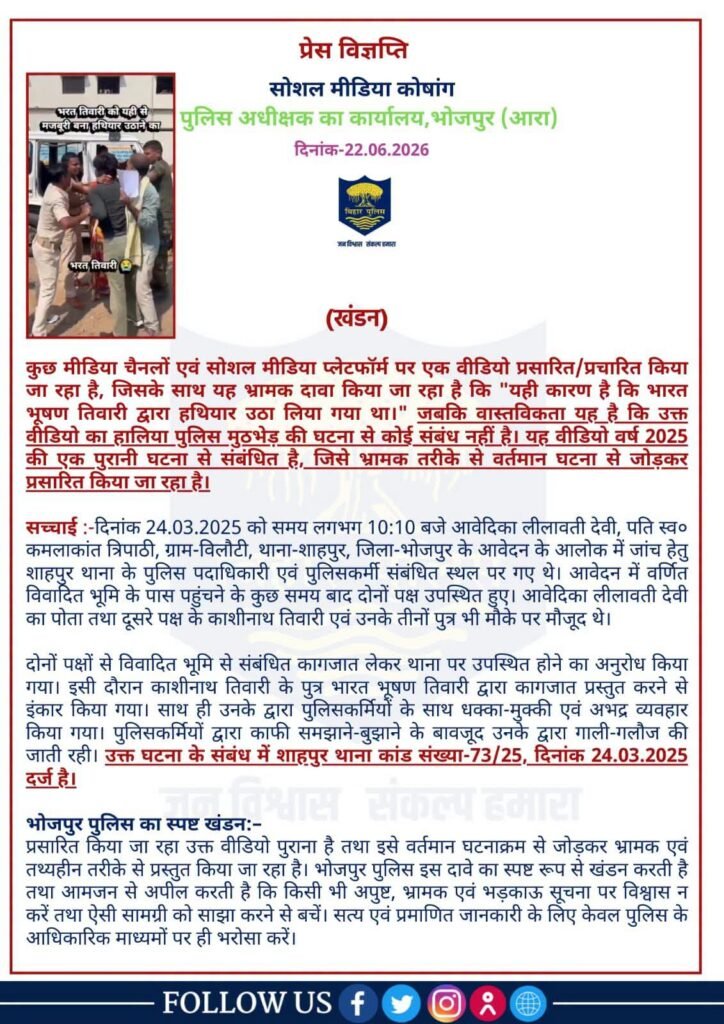
Recent Bhojpur Encounter and the Caste Narrative Following the police encounter of Bharat Bhushan Tiwari in Bhojpur, social media platforms witnessed an explosion of caste-based content. Numerous creators framed the incident as an attack on the Brahmin community rather than a law-and-order matter. Old videos were circulated with misleading captions linking them to the encounter. Bhojpur Police had to issue an official clarification stating that one widely circulated video was actually from a 2025 land dispute investigation and had no connection with the encounter incident.
The police described attempts to connect the old video with the current case as misleading. What should have remained a legal debate over police action rapidly transformed into a caste mobilisation campaign across Facebook, Instagram and YouTube.The issue gained further traction when several prominent public figures also commented on it through social media.
The debate was further amplified when prominent personalities, including former Bihar DGP Gupteshwar Pandey and former Union Minister Ashwini Choubey, weighed in through social media. Their participation brought greater visibility to the issue, contributing to higher engagement and wider dissemination of competing narratives online.
Nalanda Killings and Identity-Based Mobilisation The killing of two Paswan youths in Nalanda generated widespread outrage. Instead of focusing on facts, investigations and justice, many social media pages immediately framed the incident through a caste lens. Ironically, the X account “With Love, Bihar” also shared videos related to the lynching incident.
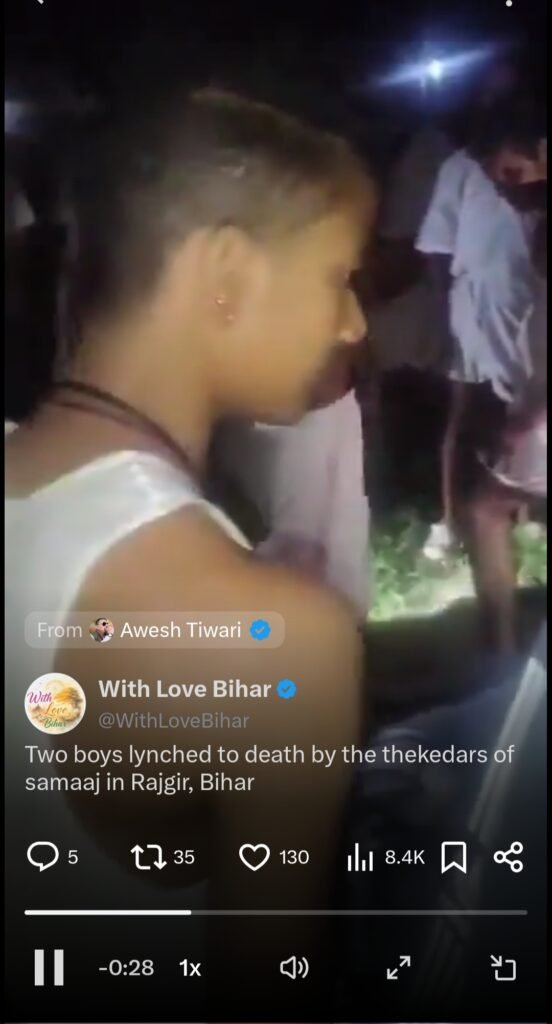
https://twitter.com/i/status/2068940044841463932
As the content spread across social media, it attracted significant engagement and further amplified public emotions around an already sensitive case.Several videos and reels portrayed the event as evidence of systematic oppression against an entire community. Counter-narratives emerged almost instantly, leading to online confrontation between caste groups. Threats of retaliation, calls for protests and emotional appeals spread rapidly across platforms. The tragedy became a digital battleground where creators competed for visibility while tensions escalated on the ground.
In June 2026, the murder of a Yamaha agency manager in Darbhanga was rapidly given a religious angle on social media, with several posts portraying it as a communal incident. However, police investigation based on CCTV footage, forensic evidence and technical surveillance led to the arrest of the accused and indicated criminal motives rather than the communal narratives circulating online. The case illustrates how engagement-driven content can communalise ordinary crimes, often spreading misinformation faster than verified facts.
The public dispute involving coaching personalities Khan Sir and Roshan Anand illustrates how social media incentives can transform professional disagreements into identity conflicts. Large sections of online content framed the controversy as a clash between Yadavs and Muslims. Countless reels, shorts and reaction videos appeared within hours, many emphasizing caste and religious identity rather than substantive issues. Every new video generated further reactions, counter-reactions and monetised engagement.
In this environment, the controversy itself becomes secondary; the real product being sold is outrage.
The alleged Begusarai gangrape case (June 2026) highlights how social media can rapidly caste-polarize a criminal investigation. While police registered an FIR, formed an SIT, and made arrests, online discussions quickly shifted toward the caste identities of those involved.
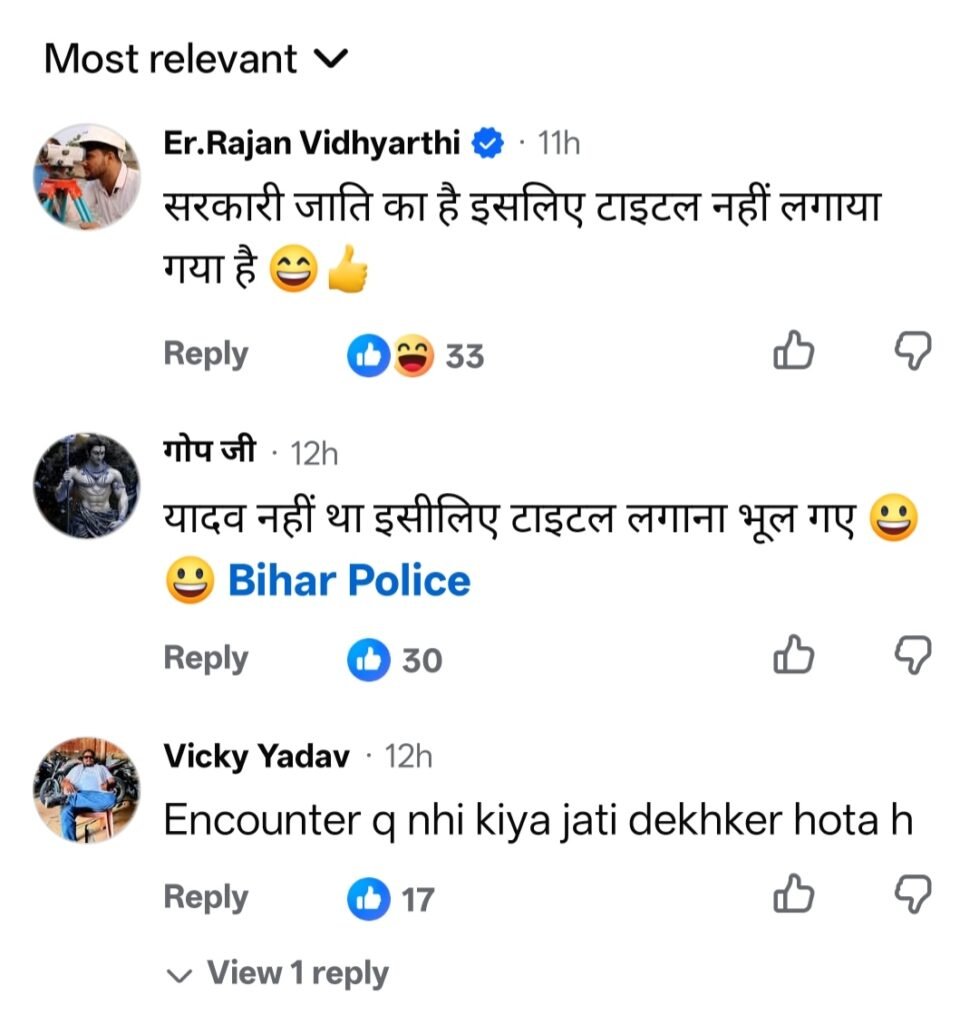
Fake News and Misleading Content The problem is compounded by misinformation. The Bhojpur Police clarification regarding an old video falsely linked to a current encounter is a textbook example of how misinformation spreads faster than official facts.
By the time a correction is issued, millions may already have viewed the original misleading content. Bihar’s Digital Caste Battlefield Bihar has long experienced politics influenced by caste identities. Social media has amplified these divisions by creating a 24-hour digital battlefield where every incident is instantly interpreted through caste loyalties.
Researchers have observed that digital platforms can reinforce caste identities and discrimination through visibility, shareability and network effects.
What was once confined to village discussions now reaches millions within minutes. The Need for Responsible Content Creation Freedom of expression remains essential in a democracy. However, freedom without responsibility can become a weapon.
Content creators, influencers and digital media operators must recognise that every viral post carries social consequences. Police investigations, court proceedings and factual verification should guide public discourse—not caste pride, communal sentiment or monetisation targets.
The challenge before Bihar is not merely controlling fake news. It is resisting a digital economy that increasingly rewards division over dialogue.
The greatest danger is not that social media reflects existing social divisions. The greater danger is that monetisation actively incentivises the creation of new divisions and the amplification of old ones.
When every tragedy becomes content, every crime becomes a caste issue, and every controversy becomes a source of revenue, society pays the price while creators collect the rewards.
Bihar’s future depends not only on stronger laws and better policing, but also on building a digital culture where truth is valued more than virality and social harmony is worth more than likes.

